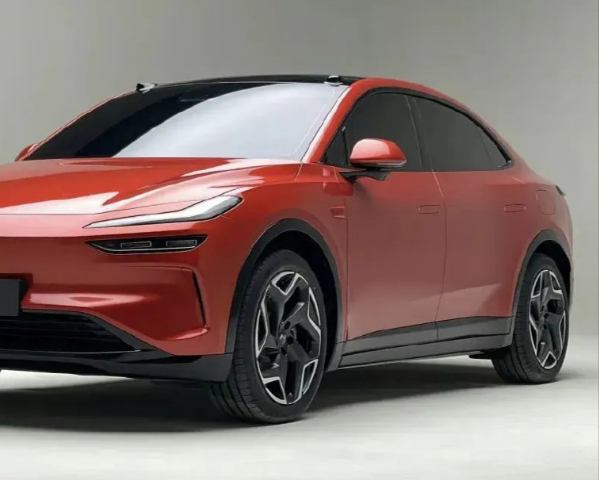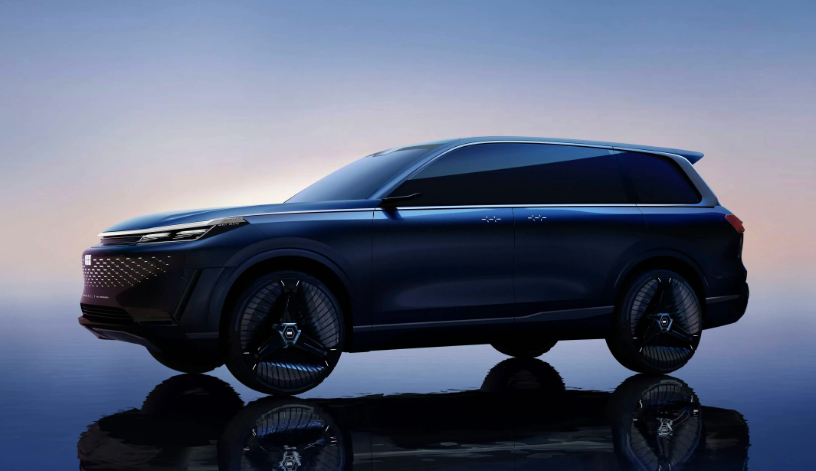
The conversation around Chinese electric vehicles usually focuses on the newest models, flashy battery tech, and factory-fresh exports. But away from the spotlight, a quieter but significant shift is happening. The trade in used electric cars from China is no longer a niche experiment. It has grown into a structured, data-rich market connecting domestic lease returns and trade-ins with dealers and importers across Southeast Asia, the Middle East, Africa, Latin America, and parts of Europe. As the first mass-adoption wave of Chinese EVs from 2020–2022 hits the secondary market, the supply pipeline is filling with vehicles that still have plenty of life left—and the numbers are starting to tell a clear story.
The supply side sets the stage. Annual passenger EV sales in China crossed the six-million mark in 2023 and have stayed high since. Many of these cars were acquired through financing plans or corporate fleets that cycle inventory every two to four years. That predictable rotation is now releasing a steady flow of inventory into wholesale channels. Data aggregators tracking major trading platforms report that listings for pure electric models jumped roughly 35 percent year-on-year in the first half of 2026. The inventory is dominated by compact crossovers, city cars, and mid-size sedans—body styles that have immediate practical appeal in markets where affordable, readily chargeable EVs are in demand.
Battery health transparency, not just odometer readings, has become the deal-making metric in China’s wholesale market. Several large auction houses and B2B remarketing platforms now require a standardized battery state-of-health certificate before a vehicle can be listed for export. Buyers are learning to read these reports with the same attention once reserved for engine compression numbers. A four-year-old electric sedan showing 87 percent battery health and 60,000 kilometers on the clock is increasingly viewed as a rational, budget-friendly alternative to a new internal-combustion import—provided the paperwork is right and the logistics are handled with care.
Pricing dynamics are also maturing. In the early days of used Chinese EV exports, prices could be erratic. Sellers often asked for figures that ignored local depreciation curves, and buyers struggled to reconcile vehicle condition with delivered cost. That is changing. Wholesale market benchmarks now exist for volume models. A three-year-old BYD Atto 3, for instance, might trade in the range of $13,000 to$16,000 FOB depending on specification and battery health, while a five-year-old Wuling Hongguang Mini EV in good nick can often be sourced for under $5,000 in container-load quantities. For international dealers, the difference between a good deal and an expensive mistake frequently comes down to three factors: battery certification, verified mileage, and containerized shipping from a port that regularly handles used EV exports. Shanghai, Guangzhou, and Ningbo have emerged as reliable export hubs with customs procedures that are increasingly familiar with electric-car documentation requirements.
Regulatory clarity is helping too. China’s Ministry of Commerce updated its used-car export guidelines in early 2025, clarifying the framework for exporting pre-owned new-energy vehicles. The guidelines reinforced that exported used EVs must pass a safety inspection explicitly covering the high-voltage system, battery enclosure integrity, and charging-port function. Several provincial governments have since streamlined the inspection-to-export timeline, cutting paperwork delays for traders who consistently meet quality thresholds. While these rules do not remove the buyer’s responsibility to conduct their own due diligence, they provide a minimum-quality floor that serious B2B buyers can build upon. Battery state-of-health alone is not enough; a proper pre-purchase assessment also needs to look at cooling system function, cell voltage balance under load, and any logged isolation faults.
Model availability is broadening beyond the early headliners. The BYD Yuan Plus (Atto 3), Dolphin, and Seal are common sights in used-export listings, but so are the Neta V, Leapmotor T03, Ora Good Cat, and the larger Aion Y Plus. Each comes with its own parts-support and service-network footprint outside China. Buyers in right-hand-drive markets have begun tracking the gradual flow of used RHD Chinese EVs, though volume remains much lower than for left-hand-drive units. Dealers who invest time in understanding which models already have aftermarket diagnostic tool support and spare-part availability in their destination country tend to build more sustainable import programs.
Another angle gaining attention is the repurposing of used electric cars as stationary storage assets, although that market is still in an experimental phase. In some African and South Asian markets, importers have experimented with using the batteries from retired Chinese EVs in solar microgrid setups. For the typical dealer or small-fleet buyer, however, the immediate value proposition remains straightforward: a tidy, well-documented used EV that charges from a standard outlet and costs significantly less than an equivalent new model.
If you are sourcing a used electric vehicle from China, insist on receiving the original battery health certificate, a VIN-based history report that includes mileage verification, and a photo walkaround that shows the actual vehicle—not a stock image—before any deposit changes hands. This step alone can filter out a surprising number of problematic units. Experienced buyers also tend to request a video of the vehicle charging on a standard AC connector and driving a short distance, as a practical check that the onboard charger and drivetrain are functional.
For those ready to act on the information, a curated selection of inspected used EVs is available through the inventory listings on this site. No wild promises—just a transparent look at what is in stock, with the key specs and battery data visible upfront.
The used electric car story from China is no longer about if the vehicles will arrive or whether they will hold value. The conversation has shifted to how efficiently buyers can separate quality units from the rest, secure logistics at a viable cost per unit, and match the right model to their local market’s charging reality. The volume is there, the paperwork is gradually standardizing, and the pricing is becoming more predictable. In a global car market that still struggles with affordable EV options, that combination deserves attention—and a disciplined sourcing approach.
If you have a specific model, budget, or destination market in mind, it is worth starting with a conversation. The market moves quickly, but the principles of a solid used EV deal do not change: verify, inspect, and ship with a clear chain of custody.