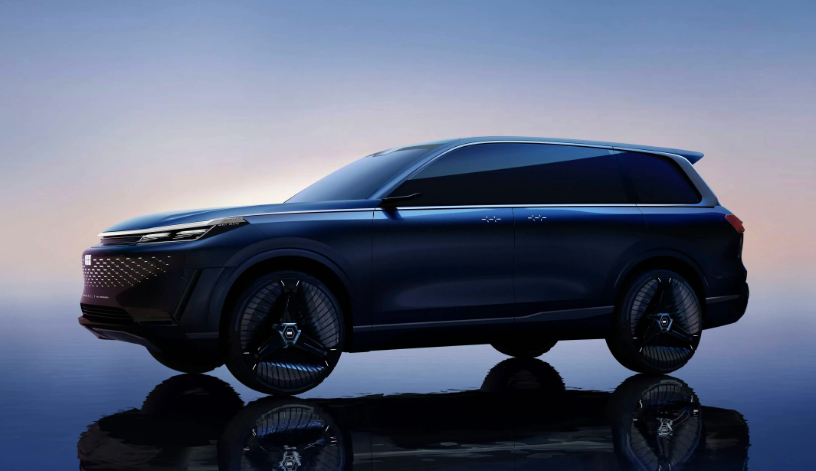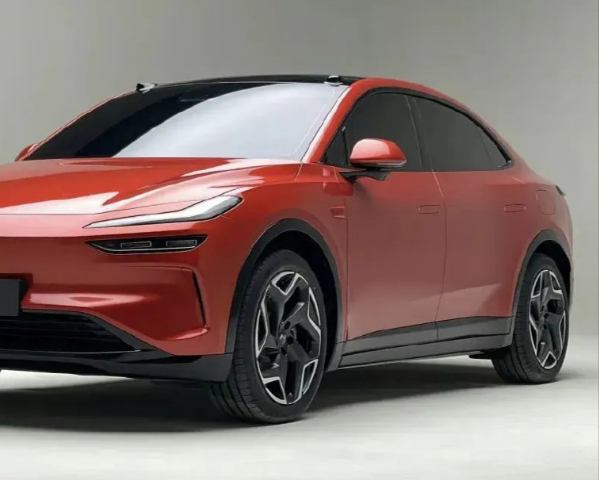
Walk through any major vehicle logistics hub in Guangdong or Shanghai right now, and the shift is impossible to miss. Rows of pre-owned electric crossovers, sedans, and city cars wearing plates from over a dozen Chinese brands are staged for shipment to Southeast Asia, the Middle East, Africa, and increasingly Europe. The narrative around second-hand Chinese electric vehicles has fundamentally changed. Where buyers once hesitated over battery unknowns and opaque service histories, they are now finding better transparency, falling wholesale prices, and a wider selection of models than at any point in the last three years.
A growing number of 2022–2024 model-year EVs are leaving corporate fleets and early-adopter driveways, creating a supply pool that simply did not exist before. For importers and individual buyers watching the space, the second half of 2026 looks materially different from the shortage-driven years that preceded it. The market is no longer just about finding a car; it is about finding the right car at the right price.
Supply Is No Longer the Bottleneck
For much of 2023 and 2024, the conversation regarding used Chinese electric vehicle exports started and ended with availability. Most China-made electric models were too new to have formed a genuine pre-owned pipeline. That dynamic has flipped. Leasing returns, trade-ins driven by rapid model updates, and a slowdown in domestic new-EV sales growth are all contributing factors.
The result is a sustained rise in inventory flowing into wholesale and export channels. Vehicles such as the BYD Atto 3, Wuling Binguo, NETA V, and Ora Good Cat are now regularly available in batches of 50 to 300 units from a single source. Buyers no longer need to scramble for one-off units at retail lots; structured, repeatable supply has become the norm for several core nameplates.
This supply expansion carries practical consequences. First, price negotiability has improved at the procurement stage because domestic sellers have more pressure to move units before facelifted successors erode residual values further. Second, logistics and shipping slot availability are now the more common constraint — not finding the cars themselves. Exporters who lock in RoRo or container space early are the ones clearing transactions fastest.
Anyone entering negotiations today should ask for a recent battery state-of-health certificate and a full service history extract — both are becoming standard requests in professional B2B transactions across China.
Battery Data Is Quietly Building Confidence
For years, battery degradation was the shadow over every used EV conversation. Without large-scale real-world data, buyers and lenders applied worst-case assumptions. That picture is steadily improving. Independent testing firms, warranty insurers, and a handful of third-party vehicle history platforms are now aggregating actual pack telemetry from tens of thousands of units. The data is not perfect, but it is consistent enough to draw meaningful conclusions.
Early LFP-equipped models that have covered between 80,000 and 150,000 kilometers are showing capacity retention in the 82–90% range under normal charging conditions. NCM packs in mid-luxury sedans and SUVs trend a few points lower but remain well above the 70% threshold that used to be casually quoted in trade circles. Real-world fleet logs suggest that thermal management quality and average charging speed matter more to long-term battery health than calendar age alone. That insight is slowly reshaping how overseas buyers evaluate model years.
A well-cooled 2023 model with higher mileage can, in many cases, deliver more predictable usable range than a garage-kept 2022 unit that only ever saw slow AC charging. For importers, the practical step is to stop treating battery health as a binary pass/fail metric and start reading the detailed SOH reports now available at major Chinese auction platforms and from certified pre-owned programs. Even a half-day of reviewing sample reports against vehicle pricing can recalibrate risk assumptions significantly.
The Price Curve Has Bent — Not Collapsed, but Corrected
Talk to five different sourcing agents this month and you will get five slightly different price quotes for the same grade of 2024 BYD Seagull or NIO ET5. That variation itself tells a story. After a period of unusually firm residual values driven by scarce supply, the market is now in a correction phase. Wholesale transaction prices for common used EV export inventory have dropped 12–18% compared to the same period a year ago, with some fleet-oriented sedans seeing even sharper adjustments.
This is not a fire sale; it is a normalization toward what buyers in markets like Jordan, the UAE, and the Philippines are willing to pay once shipping, duties, and local warranty costs are layered on. What makes this window interesting is that while vehicle acquisition costs are softening, the underlying build quality of the 2023–2024 cohort is meaningfully better than that of earlier trial-production units.
Buyers are essentially paying corrected prices for a generation of vehicles that benefit from two or three years of rapid manufacturing refinement. The value proposition has genuinely improved, provided the buyer does careful model-level research and avoids units that are already known to have part-support gaps outside China. Be cautious of inventory that sits at a port for more than six weeks without a confirmed buyer — battery calendar aging at high state-of-charge storage can shave additional percentage points off usable capacity.
Documentary Discipline Matters More Than Ever
While the physical product side of the China used EV trade has matured, the documentary side remains uneven. Export procedures are well-defined for large-scale shippers, but smaller buyers and first-time importers still encounter friction around correctly completed customs declarations, battery transport compliance certificates, and vehicle ownership cancellation records.
A growing number of destination countries are harmonizing import requirements with UN 38.3 battery testing standards and asking for explicit evidence that the vehicle’s battery management system passed a recent diagnostic cycle. Always verify that the export license, the battery test certificate, and the ownership cancellation proof are all dated within the last 30 days before any funds are released.
Bundling these three documents into a single compliance package is quickly becoming the mark of a reliable supplier. Buyers who skip this step can find their containers held at transshipment ports for weeks, eating into thin margin structures.
Quiet Rise of Certified Pre-Owned EV Programs in China
One development that rarely makes international headlines but directly impacts export quality is the expansion of manufacturer-backed and third-party certified pre-owned EV programs inside China. BYD’s CPO initiative now covers more than 40 cities, and independent platforms have begun offering standardized 1- to 2-year warranties on battery packs, motors, and onboard chargers for vehicles that pass a 140-plus-point inspection.
Certified pre-owned programs are now issuing transferable battery warranties that survive re-export, a detail that dramatically changes the risk profile for overseas dealers. The inspection reports from these programs tend to be more thorough than ad-hoc workshop checks, and several exporters are starting to prioritize sourcing from CPO pools rather than open auctions. For a dealer in a market where consumers are still skeptical of pre-owned electric vehicle durability, being able to show a manufacturer-linked warranty document with clear remaining coverage is frequently the difference between a test drive and a signed contract.
The trick is confirming which programs allow international warranty transfer and which tie coverage to the original Chinese registration only. A direct email to the program administrator costs nothing and can save substantial post-sale friction.
Looking Ahead: What to Watch for the Rest of 2026
Three signals deserve attention. First, the flow of right-hand-drive used Chinese EVs into markets like Australia and the UK is accelerating, as domestic RHD-compatible models reach three-year turnover points. Second, more provincial Chinese governments are digitizing used vehicle export paperwork, which should gradually reduce turnaround times. Third, early 2025 model-year units with sodium-ion battery packs will begin appearing in the pre-owned stream within the next six to eight months, adding a new chemistry variable for buyers to learn.
None of these developments are reasons to rush, but they all reward those who stay informed and build consistent supplier relationships now.