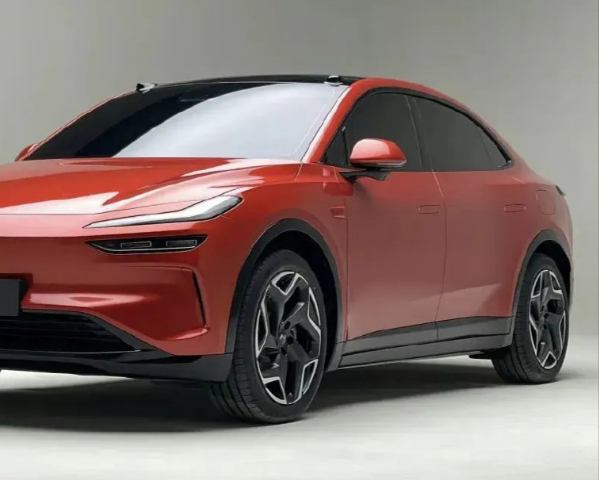
Getting a used vehicle from China to your country is just the beginning. For fleet operators and individual buyers alike, real success depends on clearing customs smoothly, making the car usable in your market, and ensuring you can maintain it long-term without headaches.This FAQ covers the practical side of what happens after the ship leaves China — from duties and paperwork to software tweaks and spare parts.1. Customs Clearance and Import DutiesQ: How are imported vehicles classified for tariffs?
Customs authorities worldwide use the Harmonized System (HS) codes to determine duties. Here are the most common categories for vehicles exported from China:
- Battery Electric Vehicles (BEVs) (e.g., BYD Yuan Plus): HS 8703.80
- Plug-in Hybrid & Extended-Range EVs (PHEV/EREV) (e.g., Li Auto L9): HS 8703.60
- Petrol ICE vehicles 1.0–1.5L (compact sedans): HS 8703.22
- Petrol ICE vehicles 1.5–3.0L (e.g., Toyota Highlander, BMW X5): HS 8703.23
- Diesel commercial/passenger vans (e.g., 10+ seater Toyota Hiace): HS 8702.10
Always confirm the exact code and duty rate with your local customs broker, as tariffs vary significantly by country.Q: Do used cars from China meet international emission standards?
Most post-2020 vehicles from the Chinese market comply with China VI (China VI-b) standards. These are technically equivalent to — and in several areas stricter than — Euro VI, particularly for nitrogen oxides (NOx) and particulate matter. This makes them eligible for registration in many countries, but you should always verify local requirements for used imports (some nations have age restrictions or additional testing).2. Software, Language, and ConnectivityQ: Can the infotainment and dashboard be switched to English?
It depends on the brand:
- Export-oriented makers like BYD and GWM usually have built-in multi-language support. A simple settings change or factory reset often does the job.
- Domestic-focused models like the Li Auto L9 may arrive with Chinese-only interfaces. In these cases, reputable exporters typically apply an English language patch or update before shipping.
Q: Will OTA updates and the manufacturer’s mobile app work overseas?
Partially. Most Chinese EVs use a Telematics Box (T-Box) with a Chinese eSIM. Once outside China, cellular connectivity drops. You can usually restore basic functions using a phone hotspot, or a local technician can install a compatible local SIM. Remote apps for locking, climate control, and charging often require a Chinese phone number and servers in China, so full functionality may be limited. Many buyers rely on third-party apps or just use the car in offline mode for daily driving.3. After-Sales Parts and MaintenanceQ: How easy is it to find replacement parts?
For international joint-venture models it’s usually straightforward:
- Nissan Sylphy, Toyota Highlander, and BMW X5 built in China share 90–95% of parts with global versions. You can order common items (filters, brakes, suspension) locally using standard part numbers.
For pure Chinese brands (BYD, GWM, Li Auto), the global parts network is growing fast. Good exporters maintain ongoing supply channels and can bundle high-wear parts (bumpers, shocks, lights) with your vehicle shipment or send them separately by air freight when needed.Q: Do mechanics need special tools?
- ICE vehicles: Standard OBD-II scanners (Launch, Autel, Bosch, etc.) work fine for diagnostics and service.
- EVs and EREVs: Basic mechanical repairs use normal tools, but high-voltage battery diagnostics often need brand-specific software. Fleet operators usually invest in the manufacturer’s diagnostic tablet for independence.
4. Drive Side and Other Practical ConsiderationsQ: Are the cars Left-Hand Drive or Right-Hand Drive?
All standard inventory from China’s domestic market is Left-Hand Drive (LHD). These suit most markets in the Americas, Middle East, Africa, Central Asia, and Eastern Europe. We do not offer LHD-to-RHD conversions, as they affect safety and structural integrity.Final ThoughtsImporting used cars from China can deliver excellent value when you plan for the full lifecycle — not just the purchase price. Understanding HS codes, software limitations, and parts availability helps you calculate the true Total Cost of Ownership (TCO) and avoid nasty surprises down the road.Whether you prefer the simplicity of a proven ICE sedan or the efficiency of modern EVs and EREVs, working with a transparent supplier who supports both the vehicle and ongoing parts makes all the difference.